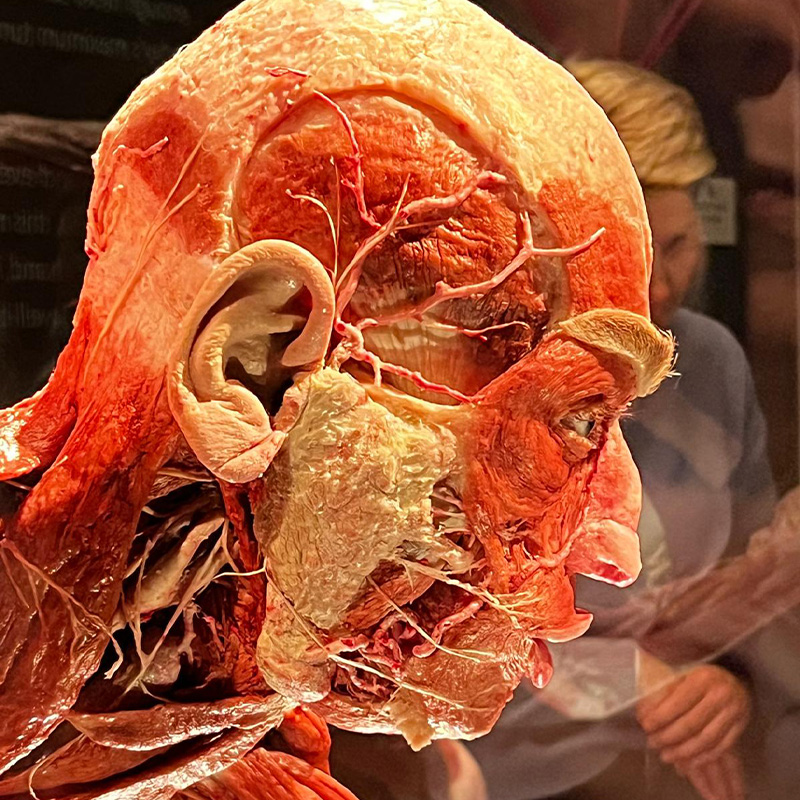
For most practitioners, a first dissection lab is unlike any other kind of learning. You may have spent years working with the living body through your hands, but meeting human tissue directly, layer by layer, changes how you understand it. This guide covers what to expect and how to arrive ready.
Before you travel
Your course begins in Berlin, where the group meets before travelling together to Guben. Arriving the evening before gives you time to settle, meet the people you will spend the week with, and arrive at the Plastinarium rested rather than rushed.
Once your place is confirmed, you will receive a joining pack with travel details, timings and the reading we suggest beforehand. None of the reading is essential, but participants who review basic regional anatomy for the course theme tend to get more from the first day in the lab.
What to pack
- Closed-toe shoes you are comfortable standing in for several hours.
- Clothes you don't mind dedicating to the lab. Lab coats and gloves are provided.
- A notebook and pencil for sketching structures as you find them. Drawing is one of the most effective ways to remember what you have seen.
- Layers. The lab is kept cool, and the classroom and accommodation can vary.
Your first day in the lab
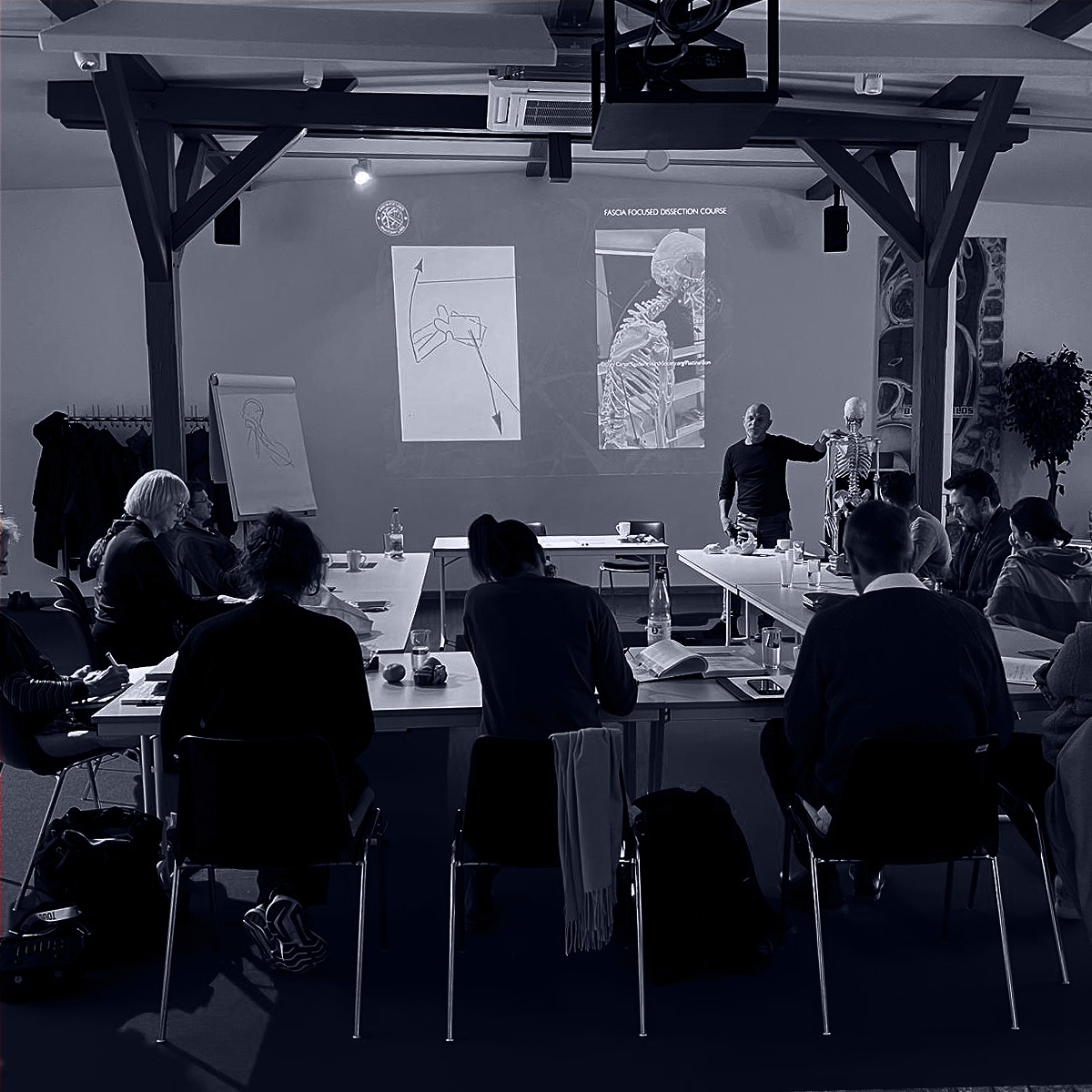
The first morning starts slowly on purpose. Before anyone picks up an instrument, the group talks through the lab protocols, the ethics of working with donor bodies, and the approach we will take over the week. Jihan and Gary will introduce the specimens and explain how the work is shared between tables.
Tables are kept small, with no more than six participants each, so everyone has hands-on time and close guidance. You will not be expected to know what you are doing on day one. The skill lies in learning to see, and that comes with patience.
Fascia doesn't reveal itself to the person in a hurry. The first thing we teach is how to slow down enough to notice what is actually there.
Placeholder quote — Course Leader
A typical day
- Morning introduction in the classroom, setting the focus for the day.
- A long session at the dissection table, working in small groups.
- Lunch together, followed by time in the BODY WORLDS exhibition spaces.
- An afternoon session combining further dissection with embodied, movement-based enquiry.
- A closing discussion to share what each table has found.
The emotional side of the work
It is normal to feel unsure before your first session, and people respond to the lab in very different ways. Some feel a sense of awe straight away. Others need a little time. The course leaders build space into each day for reflection, and you are always free to step out of the lab if you need to.
Many past participants describe the week as one of the most meaningful parts of their professional life, largely because of the respect and care the group brings to the work together.

After the course
Most people find the real integration happens in the weeks afterwards, back in their own practice. Your notes and sketches become a reference you will return to. We also encourage participants to stay in touch with each other, and many groups keep sharing what they discover long after they leave Guben.
If you have questions before your course, get in touch with the team. If you are still deciding whether a lab is right for you, read more about the experience.